

Quantum Pressure is Torque Confined in Space

In my last post I revealed that my quest to understand quantum gravity led to the discovery of quantum pressure. Not to recap the whole post, the discovery was about applying the ideal gas law, pV = nRT, to my theory of quantum gravity and almost unexpectedly seeing the definition of pressure popping up.
I don’t think that my post was very easy to follow. The reason for this was that I had only come up with the realization recently and didn’t really understand the new theory myself. Specifically, the problem was that what I was trying to describe was related to the angular momentum of a rotating string of molecules, which isn’t really the same as pressure. But now that I’ve turned the theory around a bit, I think I can better describe what I found.
First, let’s explore what angular momentum is. According to Wikipedia:
Angular momentum (sometimes called moment of momentum or rotational momentum) is the rotational analog of linear momentum. It is an important physical quantity because it is a conserved quantity – the total angular momentum of an isolated system remains constant.
Very simply put, when an object (such as a molecule) with a mass m rotates around an axis with a position vector (= length in three dimensions) r and speed (velocity) v, the angular momentum L = rmv = rp, where p is the momentum (mass times speed) of the object. The SI unit of angular momentum is kg∙m²/s.
Then we’ll need to compare it with pressure. While pressure is very clunkily (at least in my opinion) defined for a single molecule, for large objects it’s defined as force divided by area. And for pressure exerted by stationary solid objects onto a surface, the force is its mass multiplied by standard gravity of earth, which is the “the nominal gravitational acceleration of an object in a vacuum near the surface of the Earth.” Thus, the SI unit of pressure is kg/m∙s¯² (or kg * m/s¯² / m²).
Clearly angular momentum of gaseous molecules cannot be identical to pressure, because the SI units don’t match. Because I’m not a physicist but a chemist, I didn’t find it at all embarrassing to just compare the two units by dividing the units of angular momentum by the units of pressure. What I got was that there were extra divisions, both by s and by m³. Well, if we divide angular momentum by time, we get torque. According to Wikipedia:
In physics and mechanics, torque is the rotational correspondent of linear force.[1] It is also referred to as the moment of force, or simply the moment. Just as a linear force is a push or a pull applied to a body, a torque can be thought of as a twist applied to an object with respect to a chosen axis. For example, when driving a screw, a screwdriver applies torque to the screw, causing it to tend to rotate around its axis.
This means we’re nearly there. Obviously, any quantum torus of molecules occupy a very specific volume. Thus, the pressure of gaseous molecules is the torque of the molecules divided by the volume that they occupy.
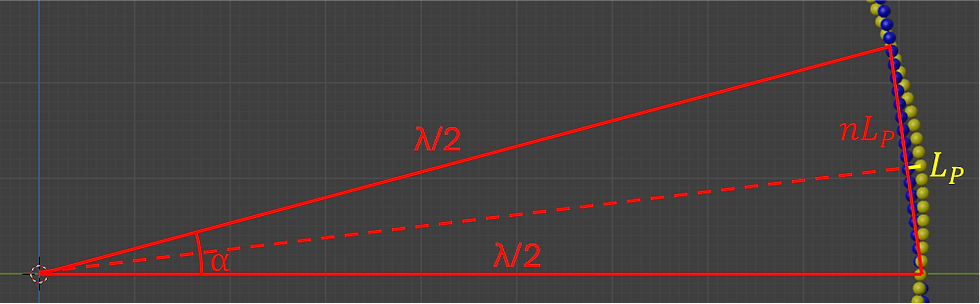
And here is a slightly ugly illustration of the concept:

This is quantum pressure in a nutshell.
And by analogy, this should also explain quantum gravity as well. But to find an exact correlation, it’s take a bit (or a lot) more time.
I think this should be it. I should be able to make the proper corrections to my theory of quantum gravity manuscript and hopefully submit it sooner preferably over later.
,
Comments